Staff Reports
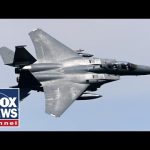
In a gripping chapter of modern warfare, the United States military is racing against time to locate a missing crew member of an F-15E fighter jet that was shot down in Iran. This incident marks a significant escalation, being the first American warplane downed by Iran since Operation Epic Fury launched just five weeks ago. As rescue teams work tirelessly, there is a palpable tension in the air—an urgent search taking place behind enemy lines, which could have lasting implications for both military operations and politics back home.
The F-15E, known as one of the Air Force’s workhorses, went down in a remote area of southwestern Iran, specifically in the Kuzestan province. This rugged landscape is not only challenging but also holds strategic importance due to its wealth of oil resources. Pictures shared by Iranian state television revealed wreckage and an ejector seat with remnants of a parachute, stirring fears that the crew member might have fallen into the hands of enemy forces who could exploit the situation for propaganda purposes.
As U.S. helicopters attempt to navigate the difficult terrain to rescue the crew member, they reportedly faced incoming fire, injuring some crew members but still allowing them to land safely. At the same time, another U.S. aircraft, an A-10 Warthog, also went down but successfully recovered its pilot. The stakes are high, as the military is not only under pressure to bring the missing crew member home safely but also to respond to ongoing strikes against key infrastructures in Iran, including nuclear facilities.
Meanwhile, tensions in the region continue to rise with missile alerts sounding in central Tel Aviv as some rockets reportedly impacted the area, causing injuries. Each development adds to the urgency of the search, as Iranian forces have made it clear that they would like to capture any downed pilots rather than eliminate them. This shift in Iranian policy introduces further risk for the U.S. military personnel involved in the rescue operation.
The search and rescue teams at work are highly specialized, trained to handle extreme conditions, much like those in the mountainous Zagros range. Equipped with sophisticated technology, they can navigate challenging environments while conducting their mission. However, as time stretches on, anxiety over the fate of the missing crew member grows. The crew member, a weapons systems officer who typically provides critical support from the backseat of the jet, is trained to survive under dire circumstances—a skill set that could be vital as he seeks to evade capture.
The implications of this incident extend beyond the battlefield. Domestically, it complicates the political landscape, with potential for discussions surrounding military strategy and the ongoing war efforts. While many Americans are accustomed to the realities of conflict, each incident like this generates new questions about military readiness and strategic planning. As the U.S. administration maintains its position on a defined mission in the region, the pressure increases to uphold that commitment amid the risks, underscoring the complexities of modern warfare and its far-reaching consequences.