admin
admin
Retired Navy SEAL Mike Sarraille’s blunt call for strikes on Iran’s “key infrastructure” is not the rant of a hawk eager for war but the argument of a trained operator who understands leverage and how to break an enemy’s chokehold without committing American sons and daughters to endless occupation. His recommendation to strike littoral nodes that power Tehran’s oil exports shows a surgical approach: cripple the regime’s revenue streams and force a political reckoning at home.
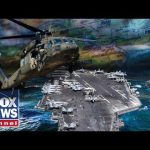
Sarraille specifically pointed to targets like Kharg Island and other coastal facilities as places where special operations and precision strikes could disrupt Iran’s ability to weaponize oil and close the Strait of Hormuz, while avoiding a costly ground campaign. That kind of focused pressure is exactly the kind of limited, strategic use of force that protects American interests without nation-building.
He went even further, arguing that cutting power and communications to regime centers could accelerate internal unrest and give Iranians a better chance to rise against their oppressors — a controversial point, but one rooted in the reality that regimes survive on revenue and control. Those who squeal about “war crimes” forget that removing the financial and logistical tools of a violent theocracy is defensive statecraft meant to save lives in the long run.
This isn’t academic: the Strait of Hormuz is a strategic lifeline, carrying roughly a fifth of the world’s seaborne oil and natural gas before Tehran’s recent chokehold, which has already sent prices and global uncertainty surging. If Iran is allowed to hold that artery hostage, every effort to defend American energy security and global stability will be undercut.
The administration’s blockade and pressure campaign has been costly to Iran and costly in political debate, but making an enemy pay a real economic price is the currency of coercive diplomacy that actually works. The blockade’s impact on Tehran’s coffers demonstrates that targeted strikes on infrastructure — combined with naval and cyber pressure — can amplify leverage and compel a negotiated reopening of the waterway.
Make no mistake: Tehran has vowed painful retaliation if strikes resume, and that threat underscores why planning must be decisive and designed to end the coercion, not invite endless retaliation. American strategy should be to take the options Iran thinks it holds away from it, not to allow a regime to blackmail the world with a single strait.
Those who lecture about restraint while pretending Iran’s aggression has no cost are living in a dangerous fantasy. Real leadership understands that sometimes the best way to preserve peace is to show iron resolve and remove the instruments of blackmail, and experts who have served on the front lines know where to apply pressure with surgical precision. Supporting that judgment is not warmongering; it is fidelity to the mission of protecting the homeland and the global order that keeps Americans safe and prosperous.
If Washington wants to avoid a wider, sloppier war, it should listen to seasoned operators who offer targeted, achievable plans to reopen trade routes, choke off the regime’s funding, and restore deterrence. The country does not need timidity masquerading as morality — it needs a clear-eyed strategy that defends liberty, secures commerce, and forces tyrants to choose between reform or irrelevance.