admin
admin
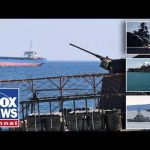
President Trump has publicly escalated pressure on Tehran, warning that the United States will not tolerate Iran or its regional partners treating the Strait of Hormuz like a cash register and even suggesting the U.S. could interdict ships that pay those so-called tolls. The president’s blunt-stated approach comes as reports circulate that Iran and its proxies have been asserting control over shipping lanes and demanding fees, forcing Washington to weigh both diplomatic and military options.
The disruptions through the Hormuz chokepoint have real economic consequences, with markets jittery and energy security suddenly back at the top of the national agenda after months of uneasy calm. Commercial traffic has been constrained and insurers and traders are treating transits as high risk, amplifying the urgency for a decisive U.S. response rather than more tentative hand-wringing.
Against that fraught backdrop, Vice President J.D. Vance has traveled to Switzerland to join high-stakes talks where White House envoys Jared Kushner and Steve Witkoff are already working the room to stitch together a temporary understanding with Iranian negotiators. The administration is juggling hard-nosed deterrence with face-to-face diplomacy, a strategy that reflects the reality that force without a political horizon leaves Americans footing the bill and the risk unresolved.
Conservatives should applaud the administration for refusing to accept the status quo of Iranian extortion, but we must remain clear-eyed: diplomacy that blinks first will only invite more predation. Negotiations are a tool of strength when backed by credible military and economic leverage, and it is right for leaders to insist that Tehran dismantle coercive practices before any easing is considered.
Mr. Trump’s readiness to order a blockade, interdict vessels tied to Iranian tolls, and take out mines that threaten international shipping demonstrates the kind of decisive posture long overdue in Washington. Those are not reckless boasts; they are the language of deterrence that keeps adversaries honest and protects global trade routes Americans depend on.
As talks proceed in Switzerland, the test for the administration will be whether it secures a durable reduction in Iranian coercion rather than a paper promise that collapses the moment global attention drifts. The nation deserves a policy that pairs sharp negotiations with unambiguous strength, ensuring energy flows, protecting allies, and holding Tehran accountable for any attempt to treat international waters like a toll road.