Staff Reports
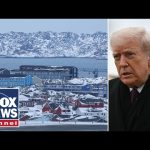
In a surprising twist in international relations, President Trump has announced that starting February 1st, Denmark and the European Union will face a 10% tariff on all goods sent to the United States. The reasoning behind this move is rooted in the belief that for too long, the U.S. has generously subsidized these nations by allowing them to export goods without additional costs. It seems that President Trump is making a case for reciprocity, insisting it is time for Denmark and its allies to step up and contribute more, especially in light of rising threats from countries like China and Russia, who both have their eyes set on Greenland.
This tariff announcement comes at an interesting time, as concerns over Arctic security have intensified. President Trump believes that Denmark is unable to adequately protect Greenland from potential incursions by China and Russia. He emphasizes that world peace hangs in the balance and suggests that Denmark’s failure to safeguard this Greenland territory could have broader implications. It’s a bit of a game of geopolitical chess that has opened the door for a host of questions about alliances and the responsibilities they carry.
Responses from European leaders have been swift and pointed. British leader Keir Starmer firmly declared that Greenland is part of Denmark and that its future should be determined by the Danish and Greenlandic people. He expressed strong disapproval of applying tariffs against NATO allies, framing it as a threat to collective security. On the other side of the English Channel, French President Emmanuel Macron expressed similar sentiments, labeling the tariff threats as unacceptable and promising a united European response if these measures are enacted.
One can’t help but wonder what led to this sudden shift in strategy. The U.S. has long been seen as the protector of its NATO allies, footing a large part of the bill to ensure their safety in an increasingly hostile world. Yet here we are, seeing a Tariff Tango where the U.S., rather than being viewed as an ally, is being perceived as a potential adversary over a tiny island. There’s a level of irony that can’t be ignored; the U.S. is pushing for stronger measures to safeguard allies while simultaneously applying tariffs that could alienate them.
Historically, America’s relationship with Greenland has seen its fair share of twists and turns. The mention of the U.S. wanting to buy Greenland from Denmark is not new; after all, the U.S. has previously purchased islands from Denmark, such as the Virgin Islands in 1917. With existing military installations, including a critical Space Force base, the U.S. indeed sees strategic value in Greenland. As President Trump looks to cement his legacy, the combination of tariffs and talks of territorial claims in the Arctic could be part of a larger chess game aimed at both securing a foothold in the region and reminding allies that the U.S. expects more from them.
In the grand scheme of things, the announcement of tariffs may be a wake-up call for the European allies. They might find themselves needing to reassess not only their strategies for security but also how they contribute to collective defense. As we wait to see how this drama unfolds in the coming months, one thing is certain: international relations have never been more entertaining, and Greenland has suddenly become the hottest ticket in the geopolitical world!