Staff Reports
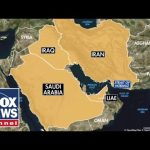
In the complicated world of international affairs, the Strait of Hormuz has become a hot topic once again, and it looks like there’s a lot more going on beneath the surface than meets the eye. Chief National Security Correspondent Jennifer Griffin recently brought attention to what many are calling a de facto closure of this crucial waterway, despite what officials at the Pentagon and the White House are saying. This situation is not just a mere misunderstanding; it’s a chess game of geopolitical implications that could sway the future of energy transport and military strategy in the region.
While officials claim that the Strait is open for business, the reality seems to paint a different picture. Just five ships passed through the Strait recently, and interestingly enough, none of them were carrying the lifeblood of the global economy—oil or gas. These ships were primarily bulk carriers, with only one reportedly making the cut to carry oil, and they had to gain permission from Iran to do so. Before the current tensions, it was common for more than 130 ships to sail through this essential maritime corridor each day without needing to pay a toll. Now, however, Iran is suggesting it may only allow a mere 15 vessels to pass daily, which is a significant reduction that has even left some experts scratching their heads about what the White House’s next move will be.
The backdrop of this situation is intensifying as Iran’s deputy foreign minister made it clear that there would be no ceasefire deal unless the airstrikes from Israel against Lebanese interests cease. This effectively puts the Strait of Hormuz under Iran’s control, as they navigate their military and diplomatic tactics with a bit of a heavy hand. There seems to be some confusion surrounding the legality of Israel’s actions in this ongoing conflict, with mediators indicating that strikes in Lebanon could jeopardize any potential ceasefire agreements. Iran’s leverage here seems strong, especially when one considers the toll they want to impose on oil tankers. A fee of $1 per barrel could net Iran a cool $2 million for a typical oil tanker carrying 2 million barrels.
In a twist reminiscent of a high-stakes poker game, President Trump has floated the idea of a joint U.S.-Iran venture to charge these tolls. However, the roadmap to such an arrangement remains hazy, as there have been no face-to-face negotiations yet, indicating that much of this conversation is based on speculation and pre-talk posturing. This miscommunication feels like a bad game of telephone, where the initial message gets muddled by the time it reaches the “players” involved.
With the stakes at an all-time high, it’s clear that this is more than just a maritime situation; it’s an indicator of larger geopolitical tensions involving Iran, Israel, and the U.S. As the global community watches and waits, one can only hope that cooler heads will prevail over this simmering conflict. The Strait of Hormuz is not just a waterway; it’s a critical artery for oil transport, and its disruption could have far-reaching consequences. In the coming days, Americans and the world alike will be interested to see how this dramatic chapter unfolds in the volatile region. Hold on to your hats, as it looks like the show is far from over!