Staff Reports
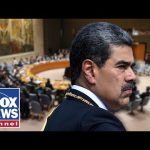
In a recent discussion about international dynamics and the state of foreign policy under President Trump, former Secretary of State Mike Pompeo shared some insightful commentary about the ousting of Venezuelan leader Nicolás Maduro. His perspectives highlighted the geopolitical chess match involving adversaries like Russia and China, and he argued that these nations are likely feeling the pressure after losing a key ally in Venezuela. It seems they may want to think twice before counting on despots, as their support has proven to be less than reliable.
Pompeo pointed out that both Russia and China have had their fair share of violating international law—from Russia’s aggressive maneuvers in Europe to China’s assertive actions in the Asia-Pacific region. This makes their complaints about Venezuela seem almost laughable. The takeaway from Pompeo’s analysis is clear: when a dictator like Maduro finds himself on the losing end and the U.S. intervenes effectively, it sends a stern message to other autocrats around the globe. The implication is that those who align with these authoritarian regimes might just be betting on the wrong horse.
Moreover, the conversation turned to the potential ramifications this move could have on other countries. Trump’s administration is eager to demonstrate that they prioritize American interests worldwide, and removing a tyrant like Maduro is a step in that direction. In fact, Pompeo suggested that when you’ve got the world’s strongest military at your disposal, it’s essential to use that power wisely—with an eye toward protecting national interests and supporting democratic movements abroad.
With the U.S. taking a more assertive role in Venezuela, attention also shifted to the possible reactions from twisted leadership within the troubled nation. There’s a growing anxiety that groups loyal to Maduro might attempt to maintain some semblance of power despite the changing tide. However, Pompeo was optimistic about the Venezuelan people’s hopes for a better future. They deserve representatives who actually reflect their interests, not the remnants of a failed dictatorship.
Ultimately, this unfolding scenario echoes a broader theme in American foreign policy that was popularized under the Monroe Doctrine—essentially asserting U.S. influence in the Western Hemisphere. As Trump’s stance on international relations reaffirms this approach, it becomes evident that the aim is to ensure America’s dominance is not questioned. In these tumultuous times, the administration continues to advocate for a strong response to threats, showing that America is ready to stand firm when faced with challenges from rogue states.
Thus, as the situation in Venezuela continues to evolve, it will be crucial to observe how U.S. policies play out in the region. Will the new leadership take a different approach, or will the shadows of the past linger? One thing is for certain: the world will be watching.