Staff Reports
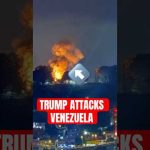
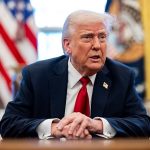
In a bold press conference held at Mar-a-Lago, President Donald J. Trump unveiled a new chapter in U.S.-Venezuela relations, which has stirred quite the pot in both political and global circles. The president announced that U.S. special operations successfully targeted Nicolas Maduro, the controversial president of Venezuela, and his wife. The operation reportedly involved transporting the couple aboard the USS Iwo Jima, where they are set to face charges in New York related to previous indictments. But the real kicker? Trump declared that the United States will continue to oversee Venezuela until a suitable government transition occurs.
Underlining a long-standing problem, Venezuela has been engulfed in economic and political turmoil, leaving its 30 million people caught in the crossfire. Trump emphasized that running this country is vital to the U.S. interests, but many eyebrows were raised over what this would actually look like and how long the U.S. would need to be involved. To put it bluntly, it sounds like the President has a unique idea to bring “America First” into play in a country that has long been plagued by a lack of effective leadership and economic stability.
In the press conference, Trump didn’t shy away from the idea of “boots on the ground,” indicating a sharp departure from his previously less interventionist foreign policy approach. His comments suggested a commitment to maintaining a military presence until a friendly and stable government can be put in place. This raised some questions from within the Republican Party, where members are scrutinizing the implications of the U.S. stepping in as a governing body in Venezuela.
Notably, the potential U.S. involvement is not merely about taking charge but also about building a new Venezuela. Trump discussed the critical role that American oil companies could play in revamping the ailing Venezuelan oil industry, which he described as a “bust.” With a full embargo still in place on Venezuelan oil, the President spoke about the need for a strong American presence to help rebuild infrastructure and get the production levels back to a point he views as necessary.
However, the future leaders of Venezuela have yet to be determined. The president cast some doubt on the ability of opposition leader Marina Corina Machado to step in effectively. While discussions are ongoing with the current vice president, who was appointed by Maduro himself, it remains unclear how the U.S. intends to navigate the political landscape and whom they will ultimately support.
As this story unfolds, it is evident that America’s involvement in Venezuela has the potential to reshape the region’s political dynamics significantly. With the military showing impressive action, the world is left to ponder how long U.S. forces would remain and what exactly that would mean for the Venezuelan people—and for the American perception of foreign intervention. In a geopolitical context, it seems like the President is determined to leave a mark on both Venezuela and the broader world stage, leading to many more discussions and debates in the days to come.