admin
admin
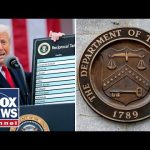
The Supreme Court on Friday issued a 6–3 decision striking down President Trump’s use of the International Emergency Economic Powers Act to impose sweeping tariffs, a move that will hamstring future presidents trying to protect American industry from unfair foreign practices. This is a raw defeat for economic patriotism and a gift to globalist interests that prefer open-door policies even when those policies devastate local factories and family farms. Conservatives should be alarmed that the bench has taken a step toward disarming the executive just when strong leadership is needed to defend American workers.
Chief Justice John Roberts wrote the majority opinion and leaned on the major questions doctrine, insisting that the Constitution vests taxing power in Congress rather than the executive and that IEEPA’s vague authorization to “regulate importation” did not clearly delegate authority to impose tariffs. That formalistic reasoning elevates procedural purity over the practical reality that Congress has too often failed to act while our manufacturing base erodes. If judges demand crystal-clear text every time the nation faces economic aggression, foreign adversaries will keep exploiting the gaps.
Even more dispiriting for the conservative movement is that several justices appointed by Republican presidents joined Roberts in restricting the president’s tools, a choice that will frustrate voters who expected the Court to side with strong national sovereignty. The decision reads like a roadmap asking Congress to fix what it refuses to fix — but Congress has shown itself unwilling or unable to move decisively on trade. This is a wake-up call: conservatives must stop treating the judiciary as the last line of defense when the legislative branch shirks its duty.
President Trump blasted the ruling as ridiculous and immediately said he would turn to other legal pathways, invoking Section 122 of the Trade Act of 1974 to impose a temporary 10 percent global tariff while Congress debates a longer-term fix. He’s right to look for every lawful lever to protect American workers, because waiting on a Congress that has been captured by special interests is a recipe for surrender. Still, temporary stopgaps are not enough — we need clear statutes that allow principled, sustained action to level the playing field.
The fallout on Main Street will be messy: billions were collected under the contested tariffs, businesses face uncertainty about refunds and compliance, and millions of consumers and manufacturers are left to absorb the economic whiplash. The Court left some routes open for targeted duties under other statutes, but the decision injects costly legal and market uncertainty at a time when predictability matters for investment and jobs. Republicans should use this moment to craft real, explicit trade law that empowers America to push back without begging permission from paralyzed lawmakers.
This isn’t only a legal dispute; it’s a battle over who will defend the American worker and who will bow to corporate or foreign interests. Conservatism must be bold enough to demand laws that both respect the Constitution and give leaders the tools to act when our national interests are threatened. If the judiciary insists on narrow readings, then it’s on Congress and conservatives in power to write plain, ironclad authority that puts America first and protects breadwinning jobs.
Patriots should pressure their representatives to pass clear, durable trade-authority legislation and to hold accountable any institution that prefers proceduralism to prosperity. Voting matters, and so does the firm insistence that America will not cede its industries or security to foreign competitors while domestic leaders wring their hands. Stand with the workers, the manufacturers, and the farmers — demand policy that fights for them, not policies that handcuff the people who built this country.