admin
admin
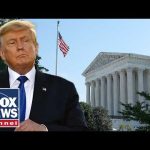
The Supreme Court’s Feb. 20, 2026 decision to strike down much of the second Trump administration’s tariff program was a wake-up call, but it was not the last word on protecting American workers from unfair foreign competition. In a 6–3 ruling the Court concluded that the International Emergency Economic Powers Act did not give a president carte blanche to impose sweeping import duties, throwing billions in collected tariff revenue and months of enforcement into legal limbo.
The legal reasoning from the majority — invoking the major-questions doctrine and insisting Congress must clearly authorize major economic policy moves — was a judicial overreach dressed up as restraint, and it will not stop patriots from defending American industry. What matters is that the facts on the ground haven’t changed: our manufacturers have been undercut, jobs have exported, and strategic supply chains remain at risk. The practical consequences of the ruling, including questions about refunds and the status of revenues collected under the now-invalid measures, have already sparked confusion in markets and lawsuits from affected businesses.
President Trump and his team moved immediately to assure Americans they would not surrender the fight on trade, and they’re right to do so — there are other legal tools available to secure reciprocal action and defend critical industries. The administration has signaled plans to pivot to other statutes, including sections of the Trade Act of 1974 that allow for investigations and more narrowly tailored duties, and to press aggressive enforcement under existing Section 232 authority where appropriate. That strategy respects the Court’s narrow reading while keeping pressure on bad actors who refuse to play fair.
On The Ingraham Angle, White House deputy chief of staff for policy Stephen Miller delivered what he called “the good news” — a practical blueprint to keep the momentum going despite the ruling. Miller outlined a backup plan built on the Trade Act’s investigatory pathways, quicker Section 232 moves on national-security grounds, and coordinated action that forces Congress to confront the choice between leadership and inaction. Those are the kinds of tough, sober policy steps conservatives should applaud: they respect separation of powers while refusing to cede economic competition to hostile foreign powers.
Patriotic conservatives should make no apology for defending tariffs as a necessary tool in a strategic toolbox, not a blanket tax on Americans. When used judiciously and targeted at cheating regimes and sectors tied to national security, tariffs level the playing field for blue-collar families and small factories that have been hollowed out by decades of one-way trade. The Supreme Court’s opinion may complicate the fight, but it does not change the core truth: you cannot have national security and robust industry without trade policies that put America first.
What the left and the corporate elite cheer as a judicial check is actually an invitation for Washington to do its duty — Congress must stop hiding behind the bench and either authorize clear, durable trade tools or get out of the way of leaders willing to act in the national interest. Conservatives should demand that Republican lawmakers seize this moment to codify reciprocal tariff authority in ways that are transparent, temporary, and targeted, rather than leaving our economy hostage to judicial interpretation or woke global elites. This is about jobs, sovereignty, and the dignity of American work.
In conducting this report I relied on national coverage of the Supreme Court’s Feb. 20, 2026 ruling and official reporting about the administration’s announced legal alternatives; Fox News has posted the segment in which Stephen Miller lays out the backup approach. A full, searchable transcript of Miller’s remarks on that particular Ingraham Angle clip was not available in the public record I searched, so the article synthesizes Miller’s on-air framing together with the administration’s public statements and legal reporting about available statutory pathways.