admin
admin
President Trump’s decision to threaten tariffs over Greenland has blown up the fragile détente that produced last year’s tentative EU–U.S. trade framework, and European leaders are now openly pausing ratification amid the chaos. This is exactly what happens when a president refuses to rubber-stamp business as usual in the face of strategic threats; the deal promised zero tariffs on many U.S. exports, but that paper collapses if allies won’t respect American security interests.
The White House made the stakes plain: a 10 percent tariff on goods from targeted European countries starting February 1, rising to 25 percent on June 1 unless Washington’s demands over Greenland are addressed. That blunt timetable is uncomfortable for Brussels, but it’s also the kind of leverage real leaders use when decades of soft diplomacy have left American interests on the table.
Predictably, EU bureaucrats squealed about coercion and dusted off the Anti-Coercion Instrument while threatening retaliatory duties that would hurt European farmers and manufacturers. Good — let them feel the consequences of siding with rivals and deploying forces into the Arctic; Europe should learn that trade and security are inseparable, and that American workers won’t forever subsidize allies who ignore strategic realities.
Let’s be blunt about Greenland: it sits astride choke points and resources that major powers — including China and Russia — openly covet. The president’s insistence on securing American influence in that theater isn’t warmongering, it’s common-sense defense of our hemisphere and our supply lines, and it’s past time for Washington to stop pretending geopolitics pauses for polite diplomacy.
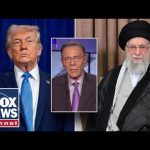
Meanwhile, the administration’s pressure on regimes in Venezuela and strikes against Iran have clear second-order effects that complicate Beijing’s geopolitical projects, as analysts note China’s vocal condemnation and recalibration in response to U.S. moves. Hudson Institute voices on Fox rightly point out that coordinated pressure across multiple theaters weakens adversaries’ grip and forces them to expend diplomatic capital — that’s smart statecraft, not chaos.
Americans should want a president who uses every legitimate tool to protect our nation and our workers, even if it makes the continentals uncomfortable. If that means the EU–U.S. trade deal stalls until Europe chooses partnership over posturing, so be it — better to walk away from a bad bargain than sign away American security and jobs for the sake of political convenience.