Staff Reports
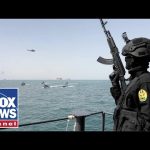
In a bold move that’s sending shockwaves through the geopolitical landscape, the United States has launched a significant strike on Iran’s Car Island, the heart of its oil export operation. This strike marks a pivotal moment in an ongoing conflict, as tensions soar over Iran’s repeated threats to choke off the vital Strait of Hormuz. The President announced this strike on his social media platform, declaring that the U.S. Air Force executed a bombing raid that “obliterated every military target” on Car Island, which was responsible for an astounding 96% of Iran’s oil exports last year.
Car Island, tucked away near the northern Persian Gulf, has been a strategic asset for Iran. The island is not just an oil hub; it’s a major vulnerability that the military aims to exploit as Iran remains embattled in the conflict. The U.S. Central Command’s operation demonstrates a significant show of force, suggesting that the United States is prepared to counter any Iranian attempt to disrupt maritime trade in the region. As ship traffic continues and imports flow from Iran to countries like China and India, the ongoing situation is reaching a boiling point, making the U.S. response even more critical.
The military’s next steps could potentially involve seizing control of Car Island itself. By deploying over 2,000 Marines aboard the Tripoli amphibious ready group, the Pentagon appears poised to take decisive action. The inclusion of advanced aircraft like F-35s, along with a variety of helicopters, means that the looming threat of a ground operation is very real. While the Marines aim to accomplish stability in the region, they might also find themselves involved in larger discussions around maritime security in the oil-rich waters surrounding Iran.
The situation on the ground in the United Arab Emirates has been tense, as Iranian forces have launched missile attacks and drones in recent days. Thankfully, there have been no casualties reported from these incidents, but the disruption to infrastructure has raised alarms. There is an undeniable connection between military action and local economic stability, as the region grapples with the long-lasting impacts of conflict on oil prices. The American administration is betting on a strategy to decrease energy costs in the long run, aiming to alleviate the financial burden that high gas prices have placed on everyday Americans.
The broader implications of this strike extend beyond immediate military success. As other countries in the Indo-Pacific region begin to cozy up to the U.S. for energy resources, this could signify a shift in how global energy markets are structured. The administration’s efforts to assert energy dominance, particularly through expanded exports, reflect a shift away from dependence on Middle Eastern oil. If President Trump’s strategy succeeds in stabilizing the oil market, it could provide a significant boost to the economy at a particularly sensitive time, as midterm elections loom, and voters are increasingly anxious about gas prices.
While skeptics may argue the risks of escalation, proponents suggest that taking firm action against Iranian threats may lead to a more stable Middle East. Should the United States successfully curtail Iran’s capabilities, it might just pave the way for a more secure environment for maritime transportation. As the dust settles from the strike on Car Island, all eyes will be on the U.S. military and its next steps, hoping for a swift resolution that allows for the free flow of oil and a drop in prices both at home and abroad.