admin
admin
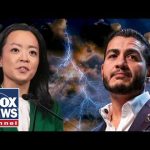
Gordon Chang’s recent appearance on Ed Henry’s show flagged a threat that too many in Washington still treat as abstract: Beijing’s active effort to shape American politics and influence our leaders. Chang, long a hawk on the Chinese Communist Party’s ambitions, told viewers that this is not mere diplomacy but a coordinated campaign to bend U.S. policy to Beijing’s advantage.
This isn’t paranoid conjecture — senior U.S. law enforcement and national-security officials have publicly warned that the People’s Republic of China runs “highly sophisticated” influence operations targeting our political processes. The Department of Justice and the FBI have described a pattern of activities — from bribery to coercion and covert influence — that plainly cross the line from foreign policy to political subversion.
Congress has also taken notice, holding hearings and producing reports that lay out recommendations to blunt China’s reach in American institutions and policymaking. Those hearings make clear that this is a bipartisan national-security crisis: our committees have examined how Beijing’s networks penetrate think tanks, campuses, and political circles with the goal of steering U.S. decisions.
At the heart of Beijing’s toolkit is the United Front approach — a web of state-directed influence that cultivates allies, funds projects, and leverages diaspora networks to create lobbying and reputation effects abroad. Analysts and think tanks have traced how United Front methods are adapted to sway elites, shape narratives, and create friendly channels inside Western democracies.
We already see the consequence in real-world money and access: investigative reporting has uncovered donations and financial links between U.S. political figures and individuals with ties to Chinese government entities, raising obvious questions about quid pro quo and foreign leverage. These disclosures should have every lawmaker scrambling to secure transparency and enforce existing prohibitions on foreign campaign influence.
Conservative Americans should not mince words: letting a strategic rival buy influence in our halls of power is political malpractice and a threat to our sovereignty. Washington must move beyond speeches and hearings to enforce strict disclosure, bar problematic partnerships, and shut down specialist pipelines that export American policy-making to foreign interests.
If our leaders truly value American independence, they will treat Beijing’s influence operations with the urgency of a national emergency — not as a negotiable bargaining chip. The fight to defend self-government and preserve honest debate at home is not a partisan hobby; it is the duty of every elected official to put country before cash and to make the United States resilient against foreign manipulation.