Staff Reports
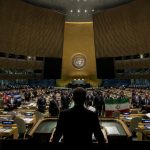
President Trump’s address to the United Nations General Assembly didn’t just shake the diplomatic floor — it became a live wire for the domestic culture war within hours. Sean Hannity grabbed that wire and ran it straight through the heart of the Democratic Party, turning a foreign-policy speech into proof, in his telling, that “the left” is morally and politically bankrupt.
Hannity’s monologue: culture war meets foreign policy
On his primetime show, Hannity treated the U.N. remarks as Exhibit A in a wider indictment: Democrats, he said, “have lost their conscience, their heart, and their soul.” He used the president’s tough talk on Iran as a springboard to argue the left is not just wrong on policy but unfit to hold power — a straightforward, no-frills message aimed at voters who’ve been hearing the same soundtrack for years.
That’s part of what makes it news: Hannity isn’t speaking into an echo chamber. His reaction helps shape how millions of conservatives interpret a moment that could have real world consequences. It’s not only commentary; it’s framing — and framing can be as consequential as a press release from the White House.
The speech that lit the fuse
President Trump’s U.N. address was blunt and aggressive. He asked a question out loud about whether to make a deal with Iran or “annihilate the Islamic Republic,” language that many world leaders and U.S. lawmakers called alarming. Parts of Iran’s delegation walked out, U.N. mediators scrambled to push for talks, and Secretary of State Marco Rubio and other diplomats began immediate shuttle efforts to cool a situation that can’t be solved by rhetoric alone.
That kind of phrasing isn’t just theater for Fox’s primetime audience; it forces real decisions in smoky rooms where generals, diplomats, and members of Congress argue what comes next. Several lawmakers are already demanding checks and clarity on war powers — because if words turn into orders, Americans’ sons and daughters end up on the front lines.
What it means for working Americans
This isn’t abstract. Escalation risks lives, raises gas prices, disrupts supply chains, and dents paychecks for people who aren’t thinking in soundbites. Families with a soldier in harm’s way, small-business owners worried about higher energy costs, veterans watching policy decisions that could repeat past mistakes — those are the real faces behind the headlines.
Meanwhile, the media and political class argue over framing: Is this prudent deterrence or reckless brinkmanship? Conservatives hear strength; Democrats hear danger. Ordinary voters hear both and wonder who’s actually looking out for them, not the next poll number or viral clip.
So here’s the hard fact: a president’s words at the U.N. can shift diplomacy, military posture, and the everyday cost of living, while a top-rated host can turn that moment into a moral verdict on a rival party. Do we want a nation run by soundbite bravado and cultural denunciations — or by steady, accountable leadership that keeps Americans safe without treating war like a campaign prop?