Staff Reports
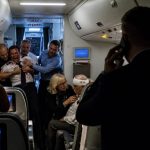
Israel’s prime minister’s office has begun to peel back the curtain on a frightening incident aboard an Israel-bound FlyDubai flight — and the spokesman’s new details make clear this wasn’t a garden-variety disturbance on the tarmac. Doron Spielman, the voice of Prime Minister Netanyahu’s office, went on air to brief the public, and what he described raises hard questions about airline safety, intelligence gaps, and who’s on watch when civilians get on a plane.
What officials are saying — and what they’re not
The Netanyahu office says investigators are treating the event as a suspected terrorist attack, not a freak passenger fight gone wrong. Spielman’s comments were deliberate and tight: there are new “details” but the probe is active, and authorities are still sorting cause from consequence. Translation: expect more fragments of the truth to drip out over days, and don’t expect official certainty until investigators can tie names, motives and methods together.
That delayed certainty is normal in complex cases, but it’s also dangerous. When governments hedge and the public fears, rumors rush in to fill the vacuum — and bad actors count on that confusion. Israel’s spokesmen are right to keep the facts measured; they’d be wrong to soften the language about intent if evidence points to terrorism.
Why this matters to ordinary travelers
Let’s be blunt: most Americans don’t care which airline logo is on the plane. They care that when they buckle up, they’ll land where they meant to land and come home. A suspected attack on a civilian flight — even one bound for a foreign airport — ripples through the global travel network and hits home in practical ways: delayed trips, rerouted flights, more invasive screenings at U.S. airports, and higher insurance and ticket costs down the road.
For Jewish families traveling to visit relatives, for businesspeople with meetings in Tel Aviv, for cargo operators who move parts and medicine — this is not a political talking point. It’s a disruption to livelihood and life. That tangible anxiety is the real fallout; governments and airlines need to treat it like that, not like an abstract security briefing.
Political fallout and the question of response
This will land squarely on the desks of policymakers. For Prime Minister Netanyahu, the optics are immediate: strong words now, action later. For Washington, the calculus is whether to publicly back Israel’s investigative moves, coordinate intelligence, and press Gulf carriers and states for cooperation if any network led back to them. If the suspect is linked to an organized group, the question becomes less about press releases and more about decisive disruption.
Conservative-minded readers should be blunt: deterrence still works. Intelligence sharing, hardened vetting, and targeted operations against terror nodes are messy, costly, and politically risky — but necessary. Soft responses and bureaucratic delays only teach enemies that attacking civilian aviation yields strategic leverage without immediate consequences.
At the end of the day there are people who were on that flight — scared, shaken, waiting for someone to tell them why their lives were put at risk. Officials will hand out statements, committees will meet, and pundits will parse every phrase. But ordinary folks want one thing: leaders who secure the skies and do not talk around the problem. Will they step up, or will the next flight be another test of patience and safety?