Staff Reports
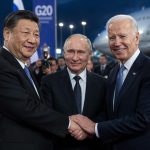
Rosatom’s boss, Alexei Likhachev, told reporters this week that the United States will likely still need Russian uranium and enrichment services if it wants to grow its nuclear power fleet. His timing was not accidental — the comment came on the eve of a face‑to‑face leaders’ meeting with President Vladimir Putin, President Donald Trump, and President Xi Jinping. Translation: Moscow is reminding Washington who still controls a chunk of the fuel chain.
Russia’s thinly veiled leverage
“It will be extremely difficult for the United States to significantly increase its power generation capacity without cooperating with us,” Likhachev said. That sentence is short, direct, and alarming. Russia still supplies conversion and enrichment services that matter to U.S. reactors. Even after the 2024 U.S. law banning most unirradiated low‑enriched uranium (LEU) from Russia, the law contains waiver windows the Department of Energy can use. Washington has used those waivers while domestic and allied capacity is built — and Moscow is reminding America the bandages won’t last forever.
Why the U.S. can’t snooze on HALEU and enrichment
Fixing this isn’t complicated to describe, but it is hard to execute. The U.S. and trusted allies must build HALEU (high‑assay LEU) and enrichment plants fast. That takes capital, permits, and years of work. Meanwhile, roughly a fifth of U.S. enrichment needs have come from Russian services in recent years, so the transition is real and painful if mismanaged. The sensible solution is to accelerate domestic projects and partner with friendly suppliers — not keep leaning on waivers that hand Russia leverage.
Don’t mistake diplomacy for weakness
Likhachev’s remarks came as a diplomatic message at a high‑level meeting. That’s strategic theater, plain and simple. Putin’s people are reminding President Trump and the United States that commercial ties still matter. Conservatives who care about national security and energy independence should not applaud cozy commerce that creates dependence. If we want a strong nuclear industry, we act like it: commit funding, clear permits, and hold suppliers to security standards — don’t wait for polite notes from Moscow.
Bottom line: Russia just served a reminder dressed as helpful advice. The response from the United States should be equally plain — speed up domestic HALEU and enrichment capacity, lean on allies where useful, and stop letting short‑term convenience become long‑term leverage. Energy security isn’t a talking point; it’s infrastructure. Let’s treat it that way before the next polite reminder arrives.