Staff Reports
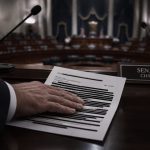
Rand Paul just dropped a ledger on the table — about 1,100 pages of what he calls Dr. Anthony Fauci’s pandemic-era diary and related notes — and the noise hasn’t stopped. The chairman of the Senate Homeland Security and Governmental Affairs Committee released the material ahead of a subpoenaed hearing where he’ll press the former NIAID director under oath. The question isn’t just what Fauci wrote; it’s what it means for public trust, records law, and how Washington explains disaster to the rest of us.
What Rand Paul released — and why it matters
The packet Paul posted and handed to the committee runs from December 2019 through December 2022 and includes diary entries, clippings, and internal emails. Paul’s message was simple and brutal: “What he wrote privately and what he told the country are two different stories.” That charge is enough to make headlines — and to force a hearing where the old instinct of oversight meets a new appetite for answers among voters who still remember lockdowns, lost jobs, and shuttered schools.
What the diary actually shows
The excerpts being highlighted are a mixed bag. One line widely quoted reads, “Now we know the market was not the source, it was the amplifier,” which Paul says contradicts public messaging that pointed to the wet market early on. Other notes show scientists on a February 2020 call split over origins, with only a couple favoring natural spillover and others not ruling out engineered or deliberate insertion — the kind of real-time uncertainty most scientists say is normal when data are thin. The package also contains personal entries about media attention and blunt private words about then‑President Trump, which opponents will use to argue Fauci cared more about image than transparency.
Science, secrecy, and the problem of lost trust
Here’s where the real damage lives: ordinary Americans don’t parse lab-notes the way virologists do. They remember being locked down, told to trust experts, and then watching officials revise guidance as evidence evolved. That flux is defensible in scientific terms — science iterates — but it’s politically catastrophic if people suspect the iteration was disguised as certainty. When people stop trusting public-health pronouncements, the consequences are concrete: lower vaccine uptake, resistance to future containment measures, and a broader skepticism that makes managing the next emergency that much harder.
The legal road ahead and what to watch at the hearing
Senator Paul has subpoena power and a clear task: press Fauci on inconsistencies, record-retention, and whether staff were directed to delete federal records. That’s serious stuff, but the legal bar is high — proving perjury or unlawful destruction of records requires clear documentary chains and intent, not just sharp excerpts. Expect Republicans on the committee to treat the diary as a roadmap and Democrats and many scientists to push back with context about evolving evidence. If Fauci has to answer under oath, Americans will get more than sound bites — they’ll get a chance to hear how decisions were made, who knew what and when, and whether the bureaucracy handled itself like it should have.
For the rest of us — the small-business owner who shut the doors, the nurse who worked extra shifts, the parent who lost a kid’s school year — this isn’t academic. It’s accountability. Were mistakes made? Of course. Was there confusion? Absolutely. But did officials hide the truth or mislead the public on purpose? That’s what the hearing should finally resolve. So here’s the hard part: will we let a pile of notes be the end of the story, or will we demand real answers about how decisions that reshaped lives were recorded, retained, and explained?