Staff Reports
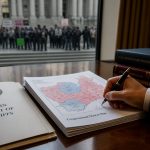
The White House was briefly placed on lockdown after a Secret Service officer‑involved shooting near the Washington Monument area forced agents to secure the complex and shelter reporters in the James S. Brady Press Briefing Room. The quick action by the U.S. Secret Service and Metropolitan Police Department contained the scene at 15th Street and Independence Avenue NW, and President Donald Trump was reported safe and continuing his event. For once, the system worked — loud, visible, and fast.
What happened near the White House
The U.S. Secret Service said personnel responded to an officer‑involved shooting at 15th Street and Independence Avenue, and that “one individual was shot by law enforcement; their condition is currently unknown.” Journalists outside the North Lawn were escorted into the briefing room as a precaution while the scene was secured. Local reports indicate a weapon was recovered and a second person may have suffered a graze wound, and MPD warned the public to avoid the area as roads were closed for hours while the investigation continued.
Agency message: situation contained, questions remain
The official message — clear and operational — was that the scene is secure and emergency crews were responding. That “all clear” came after a tense but brief scramble. Still, officials have not released full details about what led to the confrontation, the identity and condition of the person shot, or whether charges will follow. Those are normal next steps. We should expect answers from the Secret Service and MPD rather than speculation from cable pundits.
Why the rapid lockdown matters — and why we shouldn’t panic
Security protocols exist for a reason. The Secret Service reacted quickly, sheltered staff and the press, and kept the president safe. That’s worth saying plainly in an era when reflexive handwringing about “threats” has become political theater. At the same time, rapid responses require transparency: taxpayers deserve to know what triggered the shooting, whether the threat was ongoing, and how agencies will prevent similar incidents. Praise for the agents who acted does not excuse withholding basic facts.
What to watch for next
Follow‑up matters. We need official updates on the injured person’s condition, whether others were involved, and whether hospital or law‑enforcement releases confirm custody or charges. The Secret Service and MPD should lay out the timeline and evidence so the public can judge the response — not the cable chatter. In the meantime, give credit where it’s due: people in uniform did the hard job tonight. Let’s hope officials are as swift in sharing facts as they were in securing the perimeter — and let the journalists out of the briefing room before they start drafting the sequel.