admin
admin
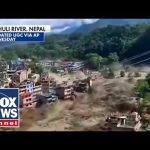
A wall of mud, ice and water tore through villages and a busy border crossing on August 26, 2026, leaving entire communities crushed under debris and rescuers scrambling to find survivors in the wreckage. What began as a routine morning turned into a national emergency for Nepal and a crisis that spilled over into Tibet, as helicopters, armies and volunteers raced against time to reach remote valleys.
Preliminary reconstructions suggest the disaster was set off when a section of glacier and rock crashed into a river valley, creating a sudden, towering surge of water and mud that slammed downstream at horrific speed. Scientists suspect an ice‑rock avalanche or glacial collapse — possibly triggered by a seismic jolt — transformed a tranquil mountain stream into a deadly tsunami in minutes, leaving almost no time for people below to escape.
Official tallies and broadcast reports now show the scale of the carnage: scores confirmed dead and hundreds — by some counts well into the hundreds and up to nearly 1,400 — still unaccounted for as nightfall choked search efforts. China’s state media said hundreds were missing in Gyirong county, including many foreign nationals, underscoring how this tragedy has international consequences and how quickly border regions can be turned into disaster zones.
A flood‑risk expert on the scene delivered a blunt and terrifying judgment: “This will happen again,” and warned that only faster warnings and robust cross‑border information sharing could save lives the next time a glacier or moraine gives way. That sober assessment should jolt every government responsible for mountain communities into action — rescue teams can only do so much when nature moves faster than the alarms.
If there is a political lesson here, it is uncomfortable but unavoidable: authoritarian control and bureaucratic opacity can cost lives when seconds matter. Beijing’s handling of information, the delays in coherent cross‑border alerts, and the patchwork of local warnings all raise painful questions about whether residents and visitors received the timely notice they deserved. It is reasonable and necessary for the free world to demand clearer transparency and faster cooperation whenever disasters cross borders.
The technical fix is straightforward and urgently affordable: broader deployment of satellite monitoring, independent glacier surveillance, and locally operated early‑warning systems that send direct alerts to villagers and tourists the moment danger signs appear. Experts who study glacial lake outburst floods have warned for years that melting and unstable mountains make these events more likely, and governments should stop relying on talk and start funding sensors, evacuation routes, and community drills now.
Americans and other foreign tourists were among those caught in the devastation, reminding patriots at home that tragedy abroad can touch our families and friends in an instant. Our response must be twofold: compassion and clarity — support for rescue and aid, and relentless insistence that host governments and international partners deliver accurate, timely information so people can make life‑saving decisions.
This is a moment for action, not virtue signaling. Stand with the rescuers and the victims, demand accountability from those who would hide or delay critical information, and push for smart investments that protect real people in real places. Hardworking communities at the edge of the world deserve better than empty promises; they deserve the tools and the truth that will keep them alive.