Staff Reports
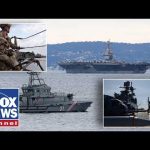
In a recent statement, President Trump made it clear that the United States’ blockade of the Strait of Hormuz will be an all-or-nothing affair. Ships will have no passage until Iran respects the demands placed upon them, which are centered around their nuclear activities and ballistic missile programs. This assertive stance from the Oval Office comes as negotiations with Iran have hit an impasse, leading to a complicated web of discussions involving several nations, including those in Europe.
Experts have noted that the situation has taken a toll on global affairs, particularly in relation to Israel and its neighbors. Ambassador Danny Danon of Israel, who leads the nation’s representation at the United Nations, emphasized the need for Iran to recognize the reality of their position. He believes they have underestimated the resolve of the current U.S. administration, thinking they could outsmart President Trump. However, with the administration’s focus firmly on holding Iran accountable, the ambassador indicated that Iran needs a reality check and must return to the table ready to negotiate in good faith.
Throwing a further twist into the diplomatic fray are talks that are set to take place between Israel and Lebanon in Washington. These discussions are taking place as a response to a ceasefire brokered between the U.S. and Iran, aiming to stabilize the region. Ambassador Danon insists that Israel is keen on a peaceful dialogue with Lebanon. They believe in direct negotiations, noting successful past peace agreements with countries such as Egypt and Jordan. However, there are concerns about the weak Lebanese government and the influence of the militant group Hezbollah, which poses a significant challenge to Israeli security.
The dynamics extend beyond bilateral talks, as Israel is also scrutinizing how various countries, particularly in Europe, contribute to the Iranian regime financially. The ambassador pointed out that some European nations are indirectly funding Iranian activities, which complicates the situation and helps Iran maintain a foothold in Lebanon. His call for international support to expel Iranian influences is a crucial point, as he argues that the future of Lebanon should remain in the hands of its citizens, not under the control of foreign entities like Iran.
As tensions rise, the conflict in Gaza is also looming large on the horizon. With recent developments indicating a potential return to hostilities, the ambassador reiterated Israel’s commitment to safeguarding its borders against threats posed by Hezbollah and other militant groups. He firmly believes that Israel will act in its self-defense, especially in light of previous attacks. The stakes are high, and both sides appear to be gearing up for a potential escalation that could change the landscape of the region once again.
In conclusion, what is unfolding in the Middle East is a complex and delicate situation that requires careful navigation. The U.S. blockade of the Strait of Hormuz, the impending talks between Israel and Lebanon, and the ongoing tensions with Hezbollah and Hamas form a tangled web of challenges and opportunities. As both diplomatic efforts and military preparations unfold, the world watches closely, hoping for a resolution that fosters peace and stability in a region much in need of it.