Staff Reports
A protest outside the ICE detention center in Newark turned ugly, and not in the way politicians who like grandstanding usually mean. What started as a demonstration ended with federal officers injured, an arrest, and a plain reminder that violence at rallies crosses a hard line.
What happened at Delaney Hall
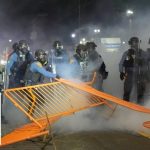
Federal prosecutors say Brendan John Geier, 26, of Madison, New Jersey, was arrested after an altercation outside the Delaney Hall ICE facility in Newark where officers were trying to clear a roadway. The complaint alleges Geier kicked one deportation officer and bit two others; both injured agents received hospital treatment and the case went straight into federal court. U.S. Magistrate Judge Cari Fais handled the initial appearance, and the DOJ labeled the incident a clear criminal assault on federal personnel.
Federal officials pushed back — loudly
The Justice Department’s statement didn’t mince words. Acting Attorney General Todd Blanche wrote that “peaceful protest doesn’t translate to violently attacking federal law enforcement officers,” and DHS Secretary Markwayne Mullin warned that “anyone who assaults a law enforcement officer will be prosecuted to the fullest extent of the law.” The U.S. Attorney’s Office in New Jersey and HSI Newark echoed that message, saying repeated assaults at Delaney Hall are criminal acts “not protected speech.” Under 18 U.S.C. § 111, assaults on federal officers that cause bodily injury can carry decades in prison — this isn’t a jaywalking ticket.
The political angle: Speaker Johnson and the broader fight
Speaker Mike Johnson, appearing on Fox’s Saturday in America, used the incident to underscore a GOP point: when protests tip into violence, the rule of law has to be defended. The Newark clash is part of a pattern we’ve watched in several cities — confrontations with ICE personnel in Portland, Minneapolis and elsewhere — and Republicans are turning those flashpoints into a campaign argument about public safety and federal authority. For voters, that’s not abstract; it’s about whether the people we authorize to enforce immigration laws can do their jobs without getting attacked on the street.
Why ordinary Americans should care
Two federal agents ended up in a hospital because a protest turned physical — that’s immediate, measurable harm, not a pundit’s talking point. For the nurses who treated them, the forensics techs who document injuries, and the mail carrier whose route was blocked that day, this is the kind of disorder that tangles up everyday life. Leaders on both sides can bemoan the erosion of civil discourse, but there’s a difference between shouting at power and physically assaulting people who are doing a lawful job; the courts will sort the criminal part, and voters should remember which leaders defend the men and women keeping public order.
So here’s the tougher question for the rest of us: do we demand accountability when protests turn violent, or do we let escalating tactics become the new normal?