Staff Reports
The big story here is simple and scary: the United Arab Emirates says its air defenses engaged ballistic missiles and drones launched from Iran — and this came just hours after U.S. forces fought off an Iranian barrage aimed at American destroyers in the Strait of Hormuz. Three people in the UAE were wounded, officials warned about debris, and both Washington and Abu Dhabi are now trading claims in a conflict that should have been on a cooldown. Instead, it looks like the fire is spreading.
UAE engaged Iranian missiles and drones
The UAE Ministry of Defence reported that air‑defence systems engaged two ballistic missiles and three unmanned aerial vehicles it says were launched from Iran. Officials gave the casualty count — three wounded — and urged people to avoid falling debris. Public reporting is clear that shots were fired and impacts were felt on the ground, but it is less clear how many incoming weapons were actually intercepted. Still, the message is raw and unmistakable: Iran’s strikes are no longer just a regional nuisance. They are hitting sovereign Gulf states.
U.S. role and CENTCOM’s account
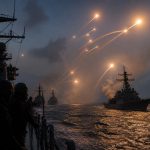
U.S. Central Command says American forces intercepted missiles, drones and small boats fired at three U.S. guided‑missile destroyers transiting the Strait of Hormuz. CENTCOM adds that U.S. assets then struck Iranian military facilities it identified as responsible for the attacks. President Donald Trump, for his part, publicly praised the defensive actions and warned Iran in blunt terms. Whether you call it deterrence or blunt force, the result is the same: the United States and Gulf partners pushed back — and Iran still keeps testing the limits.
Why this matters: escalation, commerce, and the fragile ceasefire
This isn’t a series of isolated incidents. It comes amid a fragile ceasefire that was already wobbling and at a time when shipping, energy markets, and regional stability are on edge. Insurance rates for shipping and oil markets jitter whenever projectiles fly in the Gulf. Worse, every exchange raises the odds of a miscalculation that could draw more states into a wider war. Diplomacy matters, but so does having credible force to make diplomacy stick. Letting Tehran think it can strike with impunity would be the surest recipe for a bigger, uglier fight.
Don’t applaud paralysis — demand clarity and resolve
Political leaders who reflexively call for “de‑escalation” without naming the aggressor are doing the region a disservice. Diplomacy works best backed by strength. The UAE and the U.S. have shown they’ll defend their people and ships. Now they must press for clear accountability and tighter coordination with Gulf partners to stop these attacks before one spirals into something catastrophic. Watch for further official updates. Until then, the smart move is to keep pressure on Tehran and to make sure our friends in the Gulf know we’ve got their backs — not just with words, but with action.