Staff Reports
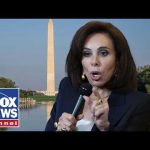
Jeanine Pirro, now serving as the U.S. Attorney for the District of Columbia, didn’t tiptoe into the debate — she marched onto the airwaves and called a leading D.C. mayoral candidate’s criminal-justice stance “This is lunacy.” That line, delivered on The Ingraham Angle, is more than cable outrage; it exposes how local politics get swallowed whole by national fight clubs, and it asks whether the people enforcing our laws should be moonlighting as the referees of partisan theater.
Pirro’s on-air broadside and what it signals
Pirro leveled her criticism at Councilmember Janeese Lewis George, who rose from Ward 4 politics to become the dominant figure in the D.C. Democratic primary by pressing progressive reforms — including past support for ending cash bail. Pirro framed those positions as emblematic of a larger socialist and even communist influence in the party, a line Fox News and others have amplified. It’s a tidy narrative for cable: paint the local candidate as radical, nationalize the race, and let the outrage machine do the rest.
Local policy, national theater
But this isn’t just political theater. For residents of Washington, D.C., bail policy and policing are real-world matters — people who get swept into the pretrial system, small-business owners worried about street-level crime, families seeking public safety. When a federal prosecutor starts labeling a mayoral hopeful’s proposals “lunacy” on national TV, it changes the calculus for voters and officials alike. The result: city policy debates become proxy wars for national ideology, and the people who live with the outcomes get lost in the crossfire.
Where enforcement ends and punditry begins
There’s also the uncomfortable question of role. U.S. Attorneys are supposed to be law enforcers, not primetime commentators. Pirro’s media history is well-known — she came to the office after a long television career — and critics have asked whether her on-air political attacks blur the lines between prosecutorial independence and partisan messaging. That matters: the Justice Department depends on public trust, and when a top federal prosecutor sounds like a campaign surrogate, it corrodes confidence in even-handed enforcement.
So here’s the hard truth: Americans are tired of national actors parachuting into local elections, shouting labels like “socialist” or “communist,” and walking away while neighbors deal with the policy fallout. If prosecutors are going to weigh in on campaigns from the TV studio, voters deserve straight answers — are those comments personal opinion, official guidance, or something that could steer enforcement decisions? Which is it, and who holds them accountable?