Staff Reports
The Strait of Hormuz is supposed to be a commercial lifeline, not a shooting gallery. While world leaders meet and mourners crowded the streets for the Ayatollah’s funeral, Iranian forces fired on merchant ships — at least one tanker caught fire — and the global economy reared up like a spooked horse.
Missiles in the shipping lane
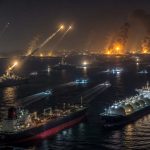
Maritime monitors logged a tanker hit by an “unknown projectile” off Oman, and U.S. officials told reporters the Revolutionary Guard fired at least two missiles at commercial vessels in the Strait of Hormuz. Industry trackers name an LNG carrier as one of the ships damaged; owners and flags haven’t all confirmed publicly yet, which is exactly the fog you don’t want when a tanker is burning. For now, advisories say no confirmed casualties and no big spill — a small mercy, but this is not the time to relax.
The human and economic ripple
Think beyond the headlines: crews are scared, insurers are slapping war-risk premiums on routes, and some companies are diverting ships around Africa. Freight costs and insurance surcharges flow up the supply chain and show up at American pumps and on heating bills. Markets already ticked higher on the news — which means every shooting incident in that strait translates into real dollars out of ordinary families’ pockets.
The politics: Iran’s warning and America’s posture
Tehran’s message was blunt — use Iran‑approved tracks or face consequences — a claim Iranian state media used to justify the strikes. Washington pushed back in public and private, and President Donald Trump, who’s in Ankara for the NATO summit, framed the moment the way he knows best: deal or force. That’s clear language, but policymakers should remember that bluster without credible deterrence simply invites more tests.
Where this goes next
We still don’t have forensic confirmation of the weapon types or a full roster of damaged ships — and those details matter for deciding a proportional response. If the IRGC is again treating global commerce as a bargaining chip, the U.S. and its allies face a choice: accept restricted seas and higher prices, or protect freedom of navigation with concrete action. NATO leaders and commercial shippers are watching; ordinary Americans are paying the tab.
So ask yourself: when a foreign regime fires on civilian shipping to make a point, do we shrug and pay more at the pump — or do our leaders stop pretending diplomacy alone will keep those sea lanes open?