Staff Reports
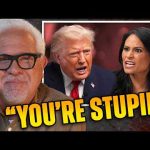
President Donald Trump stormed off an interview with Meet the Press this week after a tense back-and‑forth with moderator Kristen Welker. The exchange went viral because it showed a sitting president calling a major network “crooked” and walking off set. For supporters who see the press as biased, it was glorious. For everyone else, it was another headline in a long fight over truth, media and power.
What happened on Meet the Press — the walkoff that lit up the cycle
The interview was taped in a barn during the President’s trip to Wisconsin and later aired on NBC’s Meet the Press. Kristen Welker pushed President Donald Trump for evidence to back his claims about the 2020 election and recent California vote counts. When he did not offer new, verifiable proof, the tenor turned sharp. Trump called the network one‑sided and the moderator “crooked” or “stupid,” said “I’ve had enough,” and left the set. NBC posted a transcript and clips, and the moment spread fast across social media and the news pages.
Why the exchange escalated — questions, tone and a media that loves drama
Welker’s job is to ask hard questions, and reporters should press power. Fine. But the line between tough journalism and performative gotcha is thin. The host repeatedly demanded specifics on long‑litigated claims of 2020 fraud that courts mostly rejected, and she leaned on that to poke the President about California’s ballot counts. If you ask the same question in an accusing tone until the interview collapses, don’t be surprised when your guest snaps. The press can play referee, but when it looks like the ref is rooting for the other team, people notice.
The Anti‑Weaponization Fund: legal headache and political landmine
Another flashpoint in the interview was the Justice Department’s so‑called “Anti‑Weaponization Fund.” The department announced the fund as part of a settlement tied to an IRS lawsuit, and the idea of routing roughly $1.7–$1.8 billion drew fierce pushback. A judge temporarily blocked the plan and, with litigation and bipartisan criticism brewing, DOJ paused efforts to set it up. Acting Attorney General Todd Blanche is at the center of that fight and was reported to have been formally nominated this week. That legal mess explains why Welker kept circling back — the fund raises real questions about the use of settlement money and political optics.
What this means politically and in the court of public opinion
The walkoff feeds both camps. Conservatives cheer a president who won’t play along with what they see as biased questioning. Independents and critics see chaos and an unwillingness to answer hard questions. The real story is bigger: trust in institutions is frayed, and both the White House and the media share blame. The president can and should push back when coverage is unfair. But he also needs to offer clear, verifiable answers when he makes big claims. Meanwhile, the Anti‑Weaponization Fund saga will keep Jennings — excuse me — journalists busy, and it will give lawmakers plenty to fight over as litigation moves forward.
Bottom line
The Meet the Press walkoff was dramatic, but it was also predictable. When politics, law and television collide, someone walks off set or someone leaks a transcript. If conservatives want to win the argument, they should keep chiding the news media for bias and push for transparency on policy moves like the DOJ fund. And if the press wants to be taken seriously, it should ask tough questions without sounding like it’s trying to score points. Both sides can do better — starting with less theater and more answers.